A very simple quiz:
Q: In your job, do you deal with other people’s Personally Identifiable Information?
Q: Are you a Star Trek fan?
A: If you answered, “yes,” to one of these, this post is relevant to you. Read on!
This is a quick explanation of the “three states of data,” that are important to consider when protecting Personally Identifiable Information:
- Data in use
- Data at rest
- Data in motion
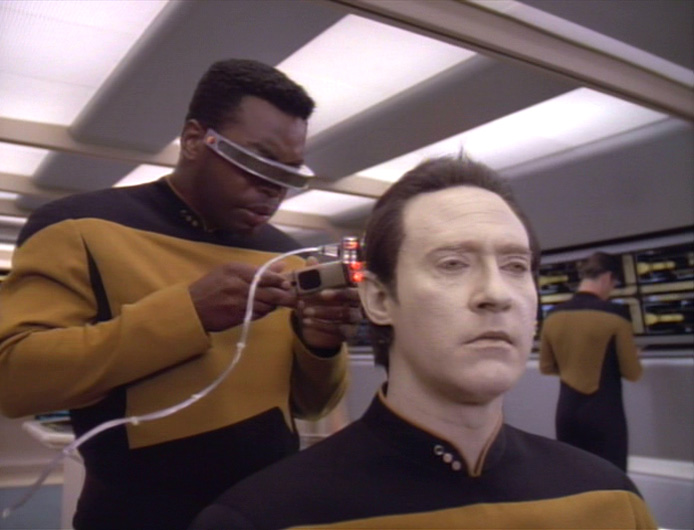
Data in use:
Data in use is data that is currently being worked on by an employee to do their job (usually on a computer, but could also be a printout of the data, etc.)

Data at rest:
Data at rest is stored data that is not currently being used.
 Data in motion:
Data in motion is data sent over networks, like an internal network, or the Internet.
Why should you care? Different states require different handling. For instance, Data at rest can be encrypted to keep it safe from prying eyes and hackers. Data in use is by definition unencrypted: you have to decrypt it to work with it. That potentially makes the data more vulnerable, and different measures need to be taken to ensure its security.
Data in motion also needs special consideration. You could encrypt a file before sending it to someone over email, but how do you get the decryption key to them? If you send that over plain email, you’ve defeated your own security.
The next post will cover some key ways to handle Data in use.